A live opponentA clear objectiveA reaction on turnover
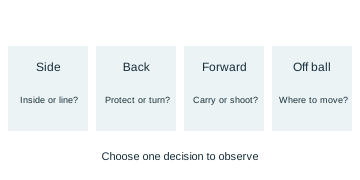
First, understand the four types of 1v1. Then build the exercise around the decision you want players to practise: choose a scoring method, shape the starting pressure and observe the response.
01
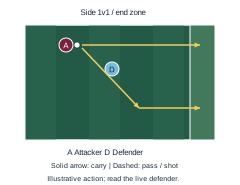
1v1 ON THE SIDE
Use the line. Find the way past.
The touchline limits one escape route. The attacker must read the defender and decide whether to go down the line or come inside.
AttackerDefenderBall
THE GAME PICTURE
A winger isolating a fullback or a wide player escaping pressure.
Attacking cues
Threaten both routes. Use body feints and changes of pace; protect the ball when the defender gets alongside.
Defending cues
Use your approach angle to guide play. Stay balanced, protect the dangerous route and avoid diving in.
Watch for
Does the attacker respond to the defender’s position, or repeat the same move regardless?
Illustration: one possible picture. Choose the scoring method and starting conditions in the design guide below.
02
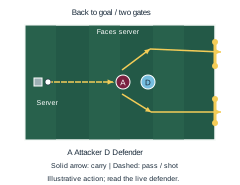
1v1 BACK TO GOAL
Feel the pressure. Create the turn.
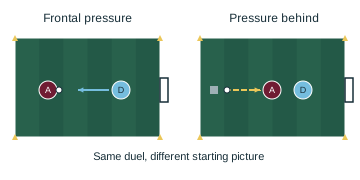
The attacker receives facing away from the target, with pressure behind or on one shoulder. The first decision is whether to protect, turn or move to create room.
AttackerDefenderServerStarting pass
THE GAME PICTURE
A striker receiving into feet or a midfielder receiving with pressure from behind.
Attacking cues
Scan before receiving. Recognise the pressure, keep the ball on the safer side and turn when space opens.
Defending cues
Stay connected without pushing or holding. Deny the turn and challenge when the ball is exposed.
Watch for
Does the first touch fit the pressure? Avoid blind turns and shielding that never leads to a next action.
Illustration: one possible picture. Choose the scoring method and starting conditions in the design guide below.
03
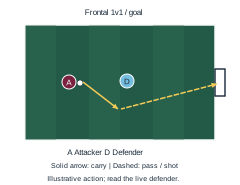
1v1 FACING FORWARD
Engage the defender. Attack the space.
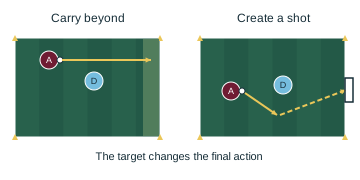
The attacker sees the defender and target ahead. The challenge is to engage the opponent and create a route past them or a clear shooting lane.
AttackerDefenderIllustrative carry
THE GAME PICTURE
A player driving at a defender in open play.
Attacking cues
Attack available space. Read distance, body shape and momentum; use disguise, a change of direction and acceleration to exploit an opening.
Defending cues
Close space under control, slow down as you approach and adjust your feet. Delay or win the ball without overcommitting.
Watch for
Does the attacker create an advantage and use it? A trick alone is not success.
Illustration: one possible picture. Choose the scoring method and starting conditions in the design guide below.
04
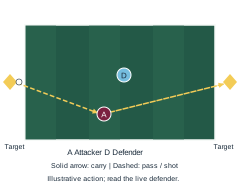
1v1 WITHOUT THE BALL / 1v1 + 2
Lose the marker. Connect the ends.
The duel starts before receiving. The attacker must escape a marker, open a passing lane and time the movement with the passer.
AttackerMarkerEnd targetPass
THE GAME PICTURE
A midfielder getting free between opponents or a forward separating to receive.
Attacking cues
Scan the ball, marker and next target. Change direction or speed, use the marker’s blind side and arrive as the passer is ready.
Defending cues
See both player and ball. Track movement, close the passing lane and intercept when the opportunity appears.
Watch for
Does the movement create a useful receiving angle and next action, or just more running?
Illustration: one possible picture. Choose the scoring method and starting conditions in the design guide below.
05
DESIGN GUIDE / SCORING METHODS
Choose what success looks like.
The target shapes the decision. Make the scoring rule clear before the first repetition.
To an end zone
Score
Dribble into the far end zone with the ball under control. Kicking it into the zone alone does not score.
Encourages
Carrying beyond an opponent and accelerating with control.
Watch for
Heavy touches and footraces; make sure the duel still requires a decision.
Through two gates
Score
Dribble through either of two separated gates under control. Only one gate is needed to score.
Encourages
Deception, changes of direction and reading the defender’s momentum.
Watch for
Gates so close there is no choice, or so far apart the defender cannot compete.
To a mini goal / big goal (if keepers are available)
Score
Finish into the mini goal / big goal (if keepers are available) when a shooting lane opens. Require beating the defender first only if that is the learning focus.
Encourages
Creating a shooting window and choosing when to dribble or finish.
Watch for
Repeated shots from the start that bypass the intended duel; adjust the starting picture or add a finishing area if needed.
Connect two end targets
Score
In 1v1 + 2, receive from one end target and pass to the opposite target for one point. Then reverse direction.
Encourages
Getting free to receive, scanning and linking movement to the next pass.
Watch for
Targets cannot pass directly to each other. A return to the same target is a reset, not a point.
06
DESIGN GUIDE / BUILD & ADJUST
Make the problem clear. Let the player solve it.
Keep a live opponent, a meaningful choice and a clear reaction when possession changes.
1. Choose the problem
Pick one of the four types and one main behavior to observe. For example: turn away from pressure, deceive a defender or separate to receive. The types can overlap: a wide player may also receive back to goal.
2. Set the starting picture
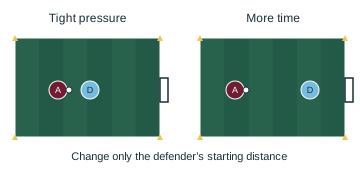
Choose whether the attacker starts with the ball or receives a pass. Vary the defender’s angle, distance and movement. Make the ball live on the pass or first touch and tell both players when they can compete. A server only feeds the ball unless you deliberately add a support option.
3. Match the target to the focus
Use end zones for carrying beyond, two gates for directional choice, mini goal / big goal (if keepers are available) for finishing and end targets for getting free to receive. The first three can be paired with side, back-to-goal or facing-forward starts.
4. Give the defender a next action
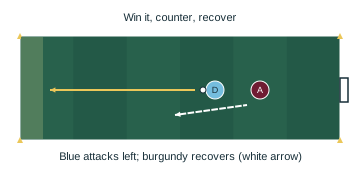
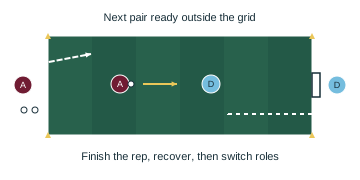
In the first three scoring formats, let the defender counter by carrying over the attacker’s starting line after winning possession. The attacker reacts immediately to defend. In 1v1 + 2, switch roles on controlled possession: connect with either target, then work toward the opposite end.
5. Keep repetitions useful
Restart after a score or the ball going out; keep spare balls ready. Alternate attacker and defender, practise from both sides and rotate end targets. Use short, intense bouts with enough recovery to preserve quality. Avoid long queues.
6. Adjust one variable
If players cannot get started, ease the initial pressure or allow more room. If attackers bypass the duel too easily, bring the defender closer or reduce the escape space. Change one thing, watch several repetitions and judge whether the intended decision appears.
7. Use constraints sparingly
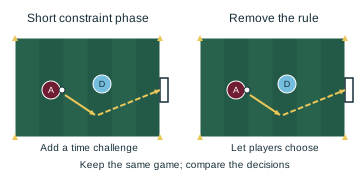
Start with free touches. Add a time challenge only if players delay unnecessarily; avoid touch limits that prevent shielding, dribbling or turning. Do not prescribe a particular trick. Remove the constraint and see whether the behavior remains.
8. Check transfer
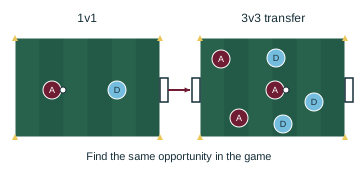
Ask: What did you see? What did the defender offer? What helped you get free? Finish with a small-sided game and observe whether players recognise the same opportunity without being told.
For 1v1 + 2: targets can move along their end line, but cannot pass directly to each other. Start with free touches inside. A deflection does not switch roles; controlled possession does. Restart out-of-bounds balls with a target and make the roles clear.